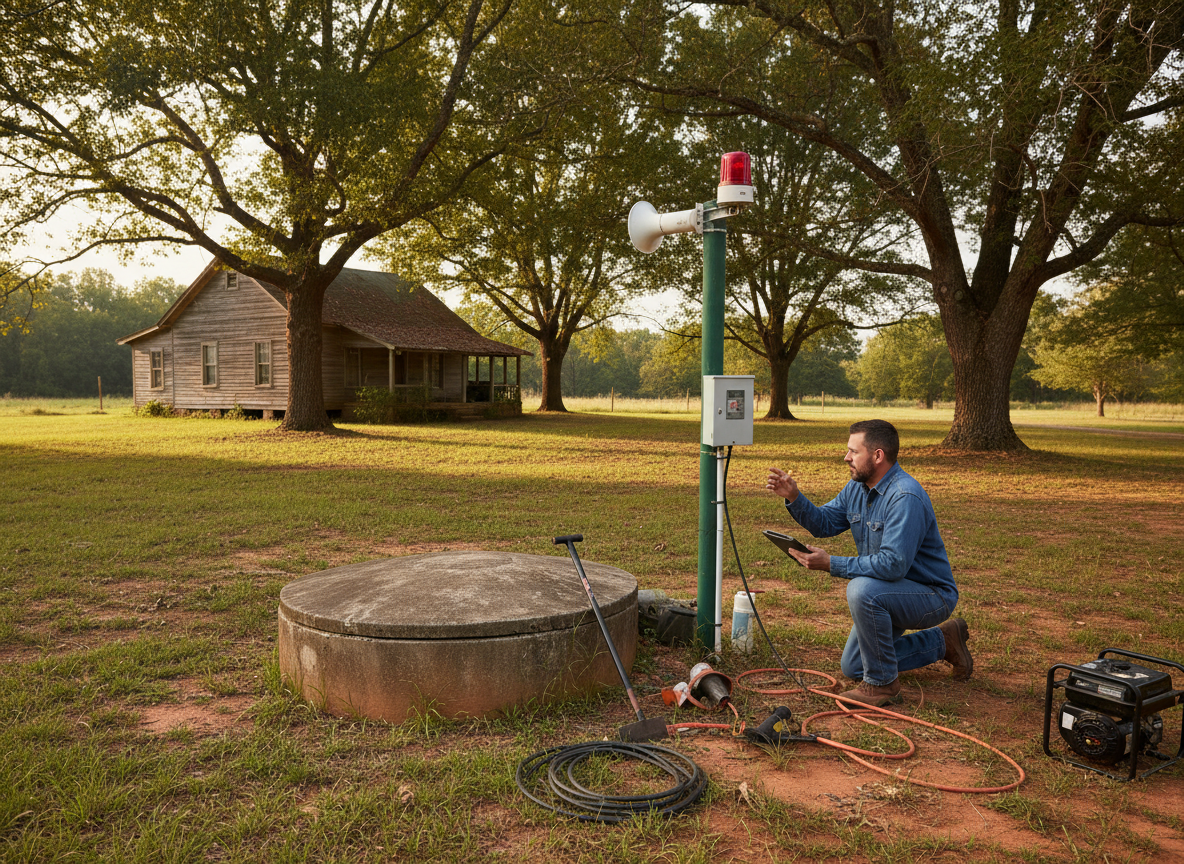
When a septic alarm activates on a rural Carroll County property, the first things we check are the pump chamber float switch and effluent filter. Many homes near the Little Tallapoosa River sit on Piedmont terrain where red clay holds water after heavy spring rain, pushing the system past its design limits. Older original tanks along GA-166 or off US-27 frequently lack risers, so we dig to access the inlet and outlet tees and look for sludge or scum buildup that trips the alarm. Gurgling sounds or sewage odor near the distribution box usually confirm the chamber is working harder than it should.
Next we trace the alarm circuit to the control panel and test the float switch operation. On lots in the Maple Street Historic District or near the University of West Georgia, newer subdivisions still use septic systems because they sit outside city sewer lines. Water softener discharge and garbage disposal load add solids that settle faster in these tanks, raising the effluent level until the alarm sounds. We also inspect for tree roots invading the tank or lines, a common issue where mature oaks line driveways on GA-61 and GA-16 corridors.
Finally we evaluate the drain field itself. Saturated soil after prolonged humidity prevents proper percolation, backing effluent into the pump chamber and triggering the alarm. We locate the distribution box, check for even flow, and note any low spots where water pools on the red clay surface. This step often reveals whether the field needs resting or if the pump and baffles require immediate service to protect the rest of the system.
Technician insight
In Carrollton, the thing that catches most people out with Septic Alarm Going Off is how fast red clay on lots near the Little Tallapoosa River saturates after one good spring rain. Homeowners often assume the alarm means the tank is full when the real issue is the field refusing to accept more effluent because of the heavy gumbo soil and older tanks without risers.
Alarm on GA-166 Rural Lot After Spring Rain
The homeowner called after the alarm sounded following three days of rain on their lot off GA-166. We found the pump chamber full because the drain field had saturated in the red clay. We cleared the effluent filter, replaced the float switch, and confirmed the field needed time to dry before normal use resumed.
Septic Alarm Going Off Services We Offer
✓Float Switch Testing and Replacement
We test the pump chamber float switch for proper rise and fall, then replace it when debris or corrosion prevents the alarm from clearing after the chamber empties.
✓Pump Chamber Inspection
We open the chamber, measure sludge and scum layers, and clear the effluent filter so the pump can move liquid without the alarm activating again.
✓Distribution Box Assessment
We locate and open the distribution box to verify even flow across all laterals and identify any blockages caused by roots or settled solids.
✓Drain Field Saturation Check
We probe the drain field for standing water and compaction common on red clay lots after heavy spring rain, then advise on resting periods or repairs.
✓Alarm Panel Reset and Wiring Check
We reset the control panel, test all connections, and replace damaged wiring that can cause false alarms on systems serving homes near Adamson Square.
How it works
- 1
Site And Alarm Review
We arrive at the Carrollton address, note the alarm type, and walk the lot to identify access points and any visible signs of backup.
- 2
Chamber And Component Access
We expose the tank and pump chamber, check the float switch, effluent filter, and baffles, then measure liquid levels against normal operating range.
- 3
Drain Field Evaluation
We inspect the distribution box and probe the field for saturation, especially on rural lots where red clay slows drainage after rain.
- 4
Restoration And Advice
We clear or replace the faulty part, confirm the alarm clears, and explain any changes needed for the system to handle local soil and rainfall conditions.
Pricing
The cost for addressing a septic alarm depends on tank size, access and condition.