2026-11-07 ·
How Often Should You Pump a Septic Tank in Carroll County
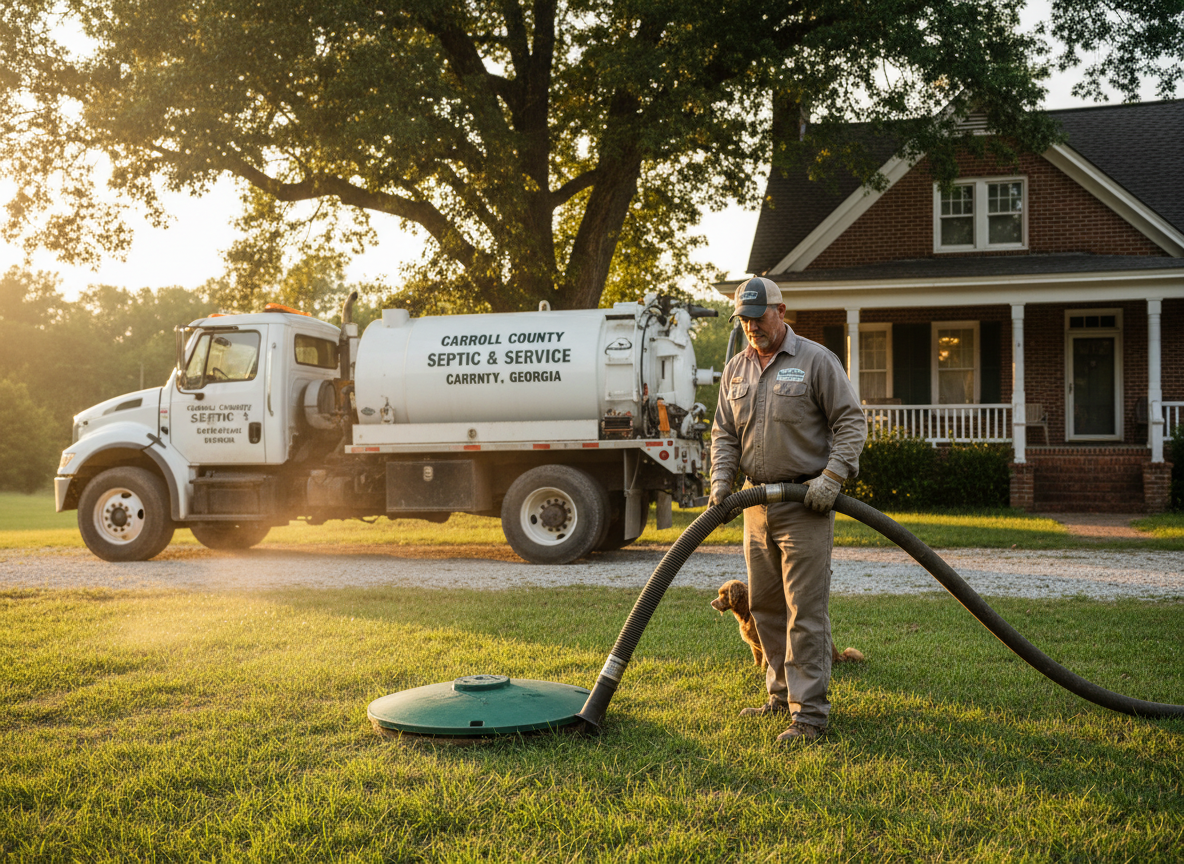
Homeowners in Carroll County typically need to pump their septic tanks every 3 to 5 years. Tank size, number of residents, and daily water use determine the exact interval, with many rural properties on the edge of that window because of the county's red clay soils and frequent heavy rains that slow drainage. Checking sludge depth once a year helps confirm when the tank approaches one-third full.
Factors That Change Pumping Intervals in Carroll County
Household size directly affects how quickly solids accumulate. A family of four on a standard 1000-gallon tank often reaches the 3-year mark, while a couple in the same tank may stretch closer to 5 years. Rural lots outside the Maple Street Historic District or near the University of West Georgia commonly have older tanks or higher water use from laundry and irrigation, shortening the cycle. Seasonal weather also matters: hot summers increase outdoor water use, and mild winters keep systems active year-round. Tracking these variables prevents solids from reaching the outlet pipe and moving into the drain field. Regular measurement with a sludge judge or professional visit gives the clearest picture for each property.
How Red Clay Soil and Heavy Rainfall Affect Your Tank
Carroll County's red clay holds water longer than sandy soils, so effluent moves more slowly through the drain field after storms. Heavy rain events common in the area can push groundwater into the tank or saturate the absorption area, forcing homeowners to pump sooner to avoid backups. Properties along the Historic Downtown Square or in outlying sections of Carroll County often sit on lots with limited space for replacement fields, making timely pumping even more important. Homeowners can watch for standing water near the tank or slow drains after rain as early indicators. Adjusting the pumping schedule to every 3 years instead of 5 years protects the system when clay and rainfall combine.
Practical Checks Homeowners Can Perform
Measure sludge and scum layers through the access port once a year using a long stick or commercial gauge. Note any sewage odors near the tank or wet spots in the yard after normal use. Keep records of pumping dates and household changes, such as adding residents or installing a new washing machine. These simple steps help match the actual interval to the 3-to-5-year guideline rather than guessing. When measurements show solids near the 12-inch mark or flow slows noticeably, schedule service before problems reach the drain field. Consistent checks also reveal whether a septic inspection or septic tank pumping visit is the next step.
Connecting Pumping Frequency to Drain Field Health
Pumping on schedule keeps solids out of the drain field, which is critical in red clay areas where saturation already limits capacity. If water backs up into the house or the alarm sounds, the issue may have moved beyond the tank itself. Reading about signs your drain field is failing in Georgia clay helps distinguish tank-related problems from field issues. Properties near Temple or Bowdon that experience repeated heavy rain should consider shorter intervals to protect the field. Linking routine pumping with periodic drain field problems checks gives a complete picture of system performance over time.